
Camel Pose
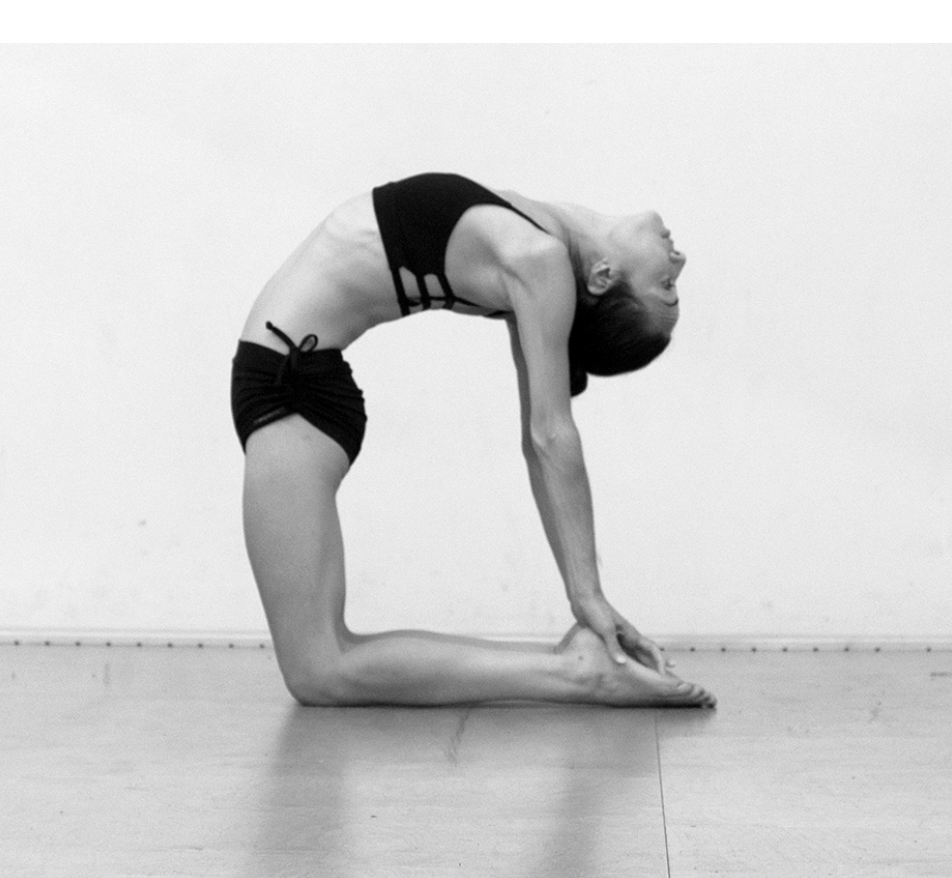
Where is the Primary Focus? Spine
Where Does the Posture Provide Maximum Benefits?
• Compresses the back of your spine and decompresses the front.
• Stretches your hip flexors.
• Strengthens your glutes if you keep them engaged.
When and Where Could I Feel the Stretch?
A deep backbend can stretch your spine, the front of your thighs (hip flexors), and possibly your shoulders.
Why Should I Do This Posture?
It stretches your spine and hips and strengthens your glutes. But really, it opens the front of your body and helps you figure out how to calm your central nervous system down after winding it up.
How Can I Improve?
Camel seems like it’s all about the backbend, but so much of it is about the push of your chest to create a big arch in your spine, opening up your upper back and shoulders, the higher you lift.
Normalizing being uncomfortable is one of the best things about any yoga class, especially hot yoga. Camel is incredibly good at this. We protect the front of our bodies instinctively because all of our organs are there, so backward bending leaves us very vulnerable physically and emotionally. Coming out of Camel, we are often met with lots of feelings: the physical sensations of dizziness, lightheadedness, exhaustion; the mental feeling of being exposed and stressed. Being able to take a couple of breaths and be still in order to get ourselves back to homeostasis is such an amazing skill. It’s the entire class summed up in one posture.
The physical challenge of the posture for me is primarily keeping my glutes engaged by squeezing my butt. After that, it’s pushing my chest up to get more into my upper back and driving my hips forward. For the people who are so flexible that they can push their hips past their knees, they need to work more on pushing up to create that roundness in the spine. If you are still working on getting your hands to your feet, work on bringing your elbows toward each other and slowing your breathing down.
All of us can get better at getting still after the posture. Really committing to letting all the feelings—the thoughts, the overwhelm of the posture, of life—wash over us without attaching, investigating, or fixing. Just truly being present for the experience.