
Locust Pose
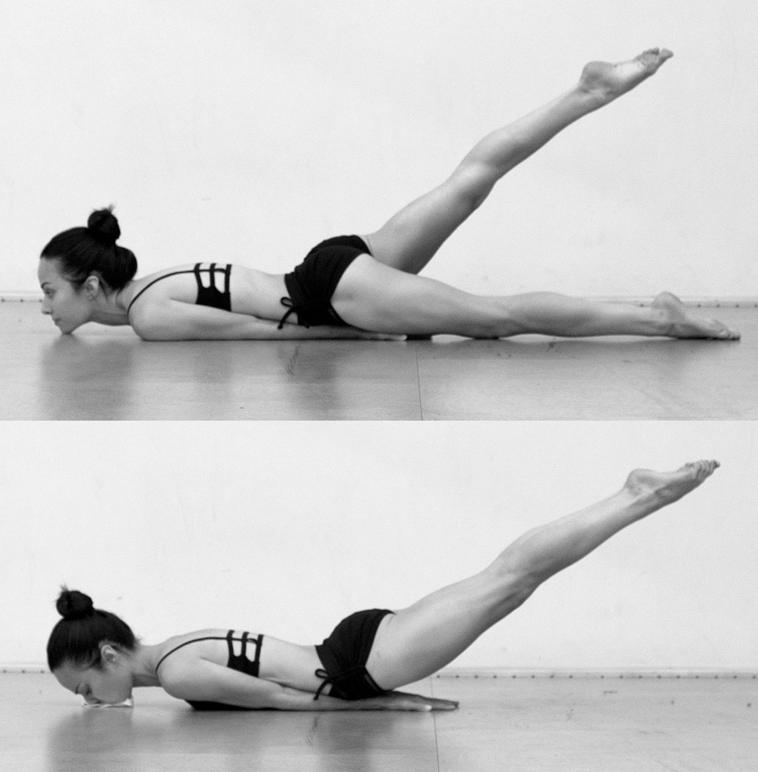
Where is the primary focus? Upper back
Where does the posture provide maximum benefits? Upper back, glutes, and legs.
When and where could I feel the stretch? Upper back and legs.
Why should I do this posture?
As the second posture of the four-part Spine Strengthening Series, Locust works the Upper back, the other three round out, addressing your entire spine.
How can I improve?
I have a playful theory that genetics might determine whether someone can lift their legs straight up in the full expression of Locust Pose. It’s my lighthearted way of explaining why my own legs seem to hover just six inches off the ground—yet it feels oddly true. The pose demands upper back flexibility and strength, but even a modest lift delivers benefits. And for those determined to reach higher? Many achieve it by kicking up, which is impressive (though not the posture’s true intention).
Locust Pose is a quiet powerhouse. It builds upper spine strength and mobility while toning the legs, glutes, and hips. Its brilliance lies in the balance of asymmetry (single-leg lifts) and symmetry (both legs together), plus the nuanced challenge of lifting one leg while relaxing the other—a test of focus as much as muscle.
For years, I’ve taught that stretching backward before lifting upward is the secret. This subtle shift engages more muscles, creates space in the hips, and aligns the body. Without it, lifting straight up often sacrifices form: the hip rises, the heel drifts off-center. Like all yoga postures, Locust rewards finesse over brute force. Initiate the movement by stretching back—this activates the very muscles needed to lift. Then, the real work begins –raising the leg without letting it twist or wobble. A simple trick? Let the sole of your foot guide you. If it points straight up, you’re aligned. And don’t forget the other leg — keep it relaxed, resisting the urge to recruit it for help.
The full double-leg lift is where shear strength takes over. It’s easy to fixate on height, but progress lives in the details: squeezing your legs together, aiming the soles of your feet upward, pressing hands into your towel for leverage.
Some days, I feel stuck here — until I remember to play. Some moments call for extra effort; others invite curiosity over struggle. Locust isn’t about perfection. It’s an investigation: What can my body do today?