
Rabbit Pose
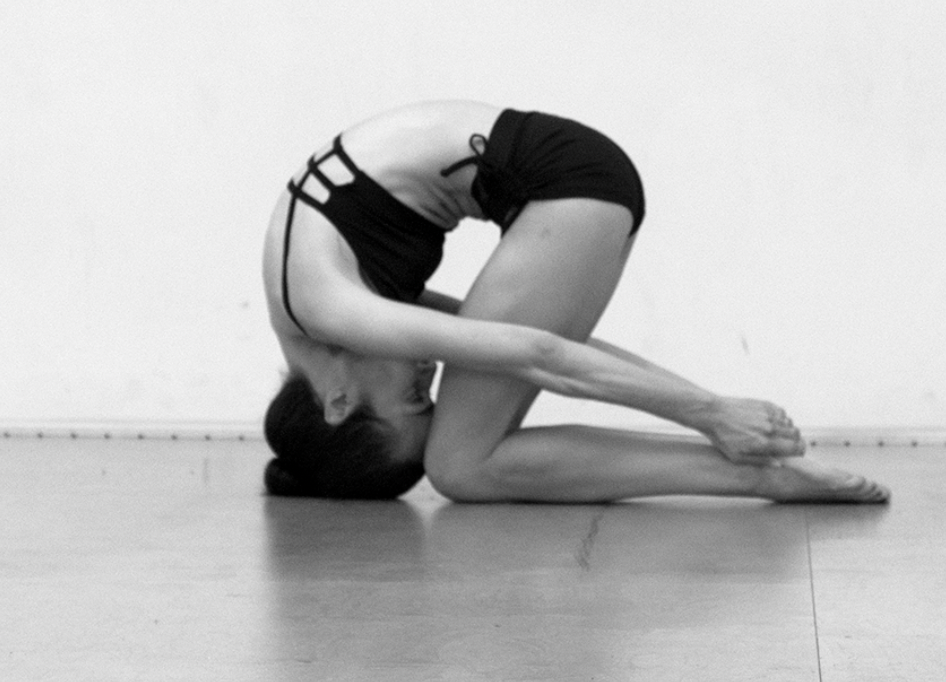
Where is the Primary Focus? Spine
Where Does the Posture Provide Maximum Benefits?
• Stretches your spine.
• Works as a complement to Camel.
• Builds strength in the shoulders and hands.
When and Where Could I Feel the Stretch?
From the base of your skull to your coccyx. Maybe in the shoulders, wrists, and fingers.
Why Should I Do This Posture?
It’s a deep forward rounding after the deep backward bend of Camel. It expands the back of your spine and compresses the front.
How Can I Improve?
I can do a pretty good Rabbit posture, but it’s still uncomfortable, and I have to work hard if I want to feel it deeply. It’s a confusing posture and throws a lot of people off at the beginning. Like so many, it’s pretty easy to phone it in and takes a lot of effort to feel it through the length of your spine.
Once you have your hands on your feet, you can forget about them for a minute. Tucking your chin to your chest as tightly as you can initiates the work in your spine. Continue that work by trying to touch your forehead to your knees. On the way down, you can start pulling on your feet to make the compression tighter. Lifting your hips early will also help the compression and get your hips higher. Your forehead might touch your knees, or your head might touch your towel. From this point, it’s all pull and lift. Sucking in your stomach will help the front-side contraction. Bringing your shoulders away from your ears will make room for your neck to curve more and strengthen your shoulders.
With all that work, breathing is the most important thing. Your body's proportions might make this posture easier or harder. It’s the effort and the journey that have all the effect; the destination simply gives you something to strive for.